
• • • • • •
Amy Ione
Title: Jazz
Date: 1983
Medium: Ink on paper
Dimensions: 8.5×11 inches
Unsigned
Catalog Number: 1983_Jazz
This section showcases works on paper. Since the purpose of this website is to archive Amy Ione’s work from the 1970s to the present, both successful and less successful work is displayed. For more information about any of the works, click on the caption below the painting or send an email.
• • • • • •
Amy Ione
Title: Jazz
Date: 1983
Medium: Ink on paper
Dimensions: 8.5×11 inches
Unsigned
Catalog Number: 1983_Jazz

The astrology series used each astrological symbol as a design starting point and the symbol of its ruling planet as a design counterpoint. The series was developed between 1981 and 1985.
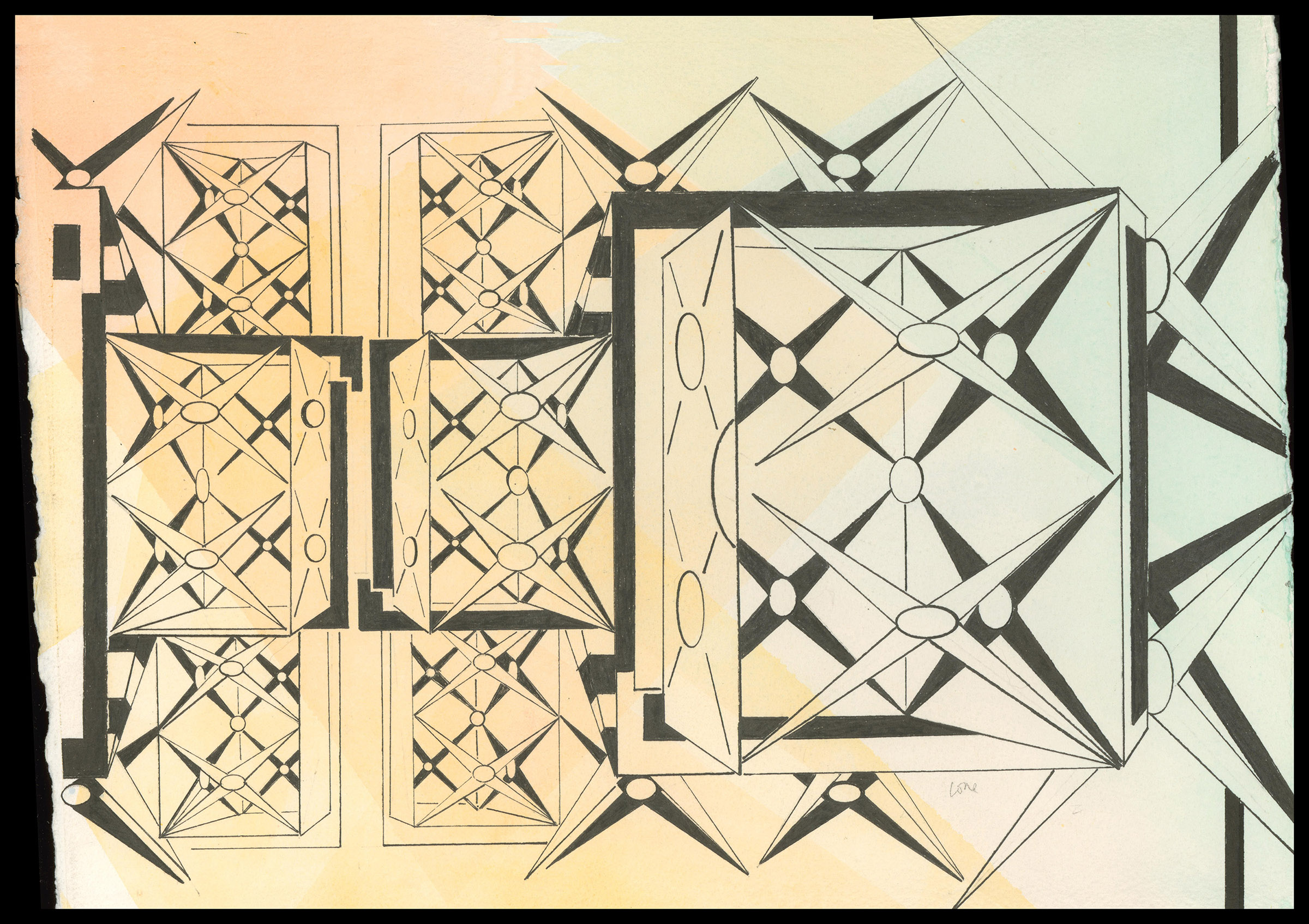
Based on the San Francisco Bay Bridge design, this diluted acrylic and ink piece was created on 300lb archival watercolor paper.

Faces captures the fleeting essence of human expression. The ink lines, at once delicate and assertive, animate the painted paper with a chorus of gazes. Each face is distinct, yet together they form a collective portrait that speaks to our shared humanity and the variety of expressions we wear. Thus, the work invites viewers to consider what identity is and how the act of looking connects us–and connects the artist with her work. Continue reading “Faces (Drawing on Painted Paper), 1981”
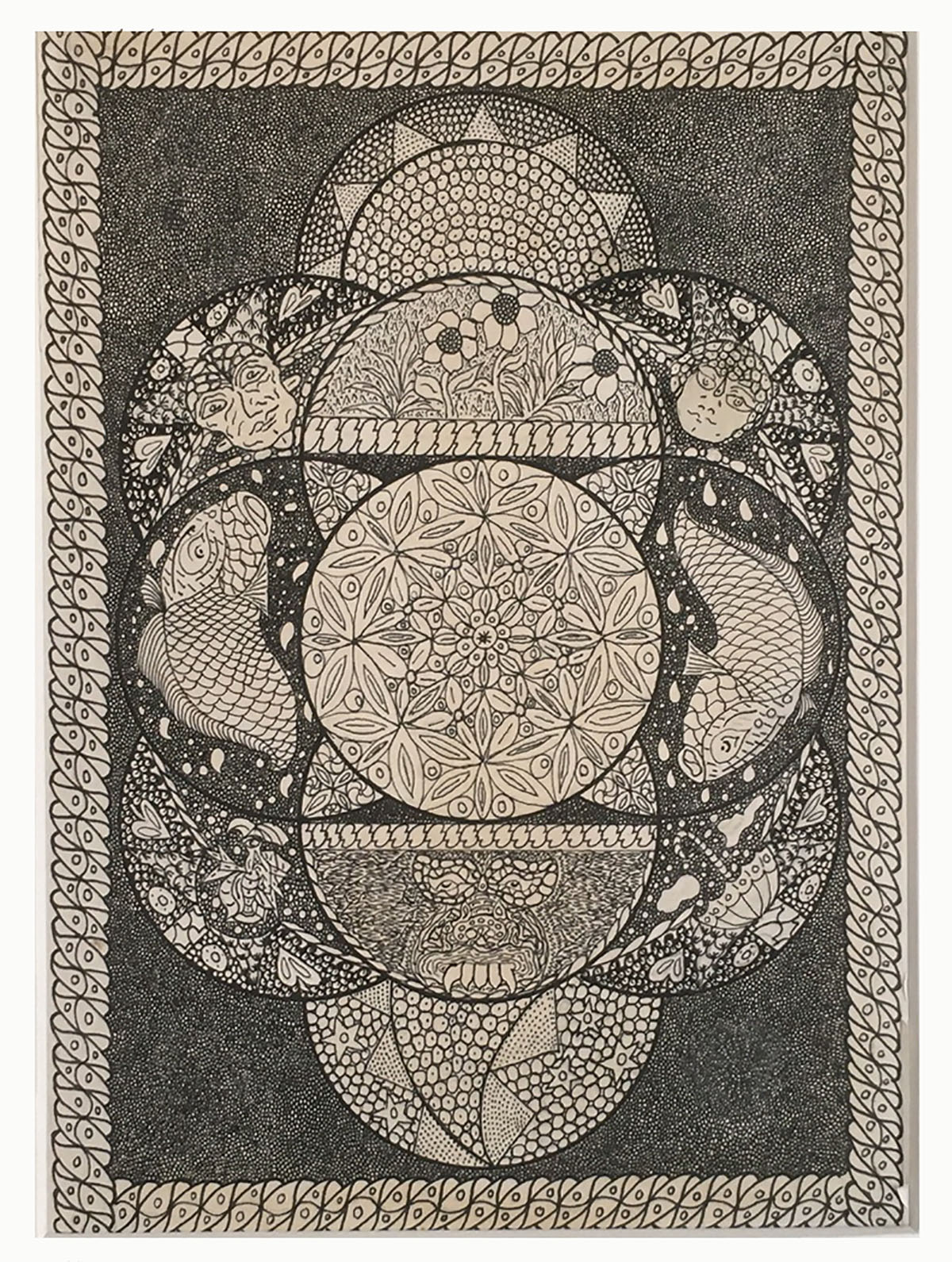
The First (Pisces) (1973) was conceived during the 1970s and can be associated with the contemporaneous explorations of astrology, mandalas, and esoteric systems done by many artists and in Western psychology generally during this decade. An ink drawing, this mandala was more seminal in my development as an artist in terms of process than in terms of the kinds of idea systems it evokes.
The three process elements of note are (1) the background texture; (2) a patched section—born of an accidental ink spill— on the right, and near the edge of the circle with the beast-like face; and (3) the black-and-white contrast. Continue reading “The First (Pisces)”
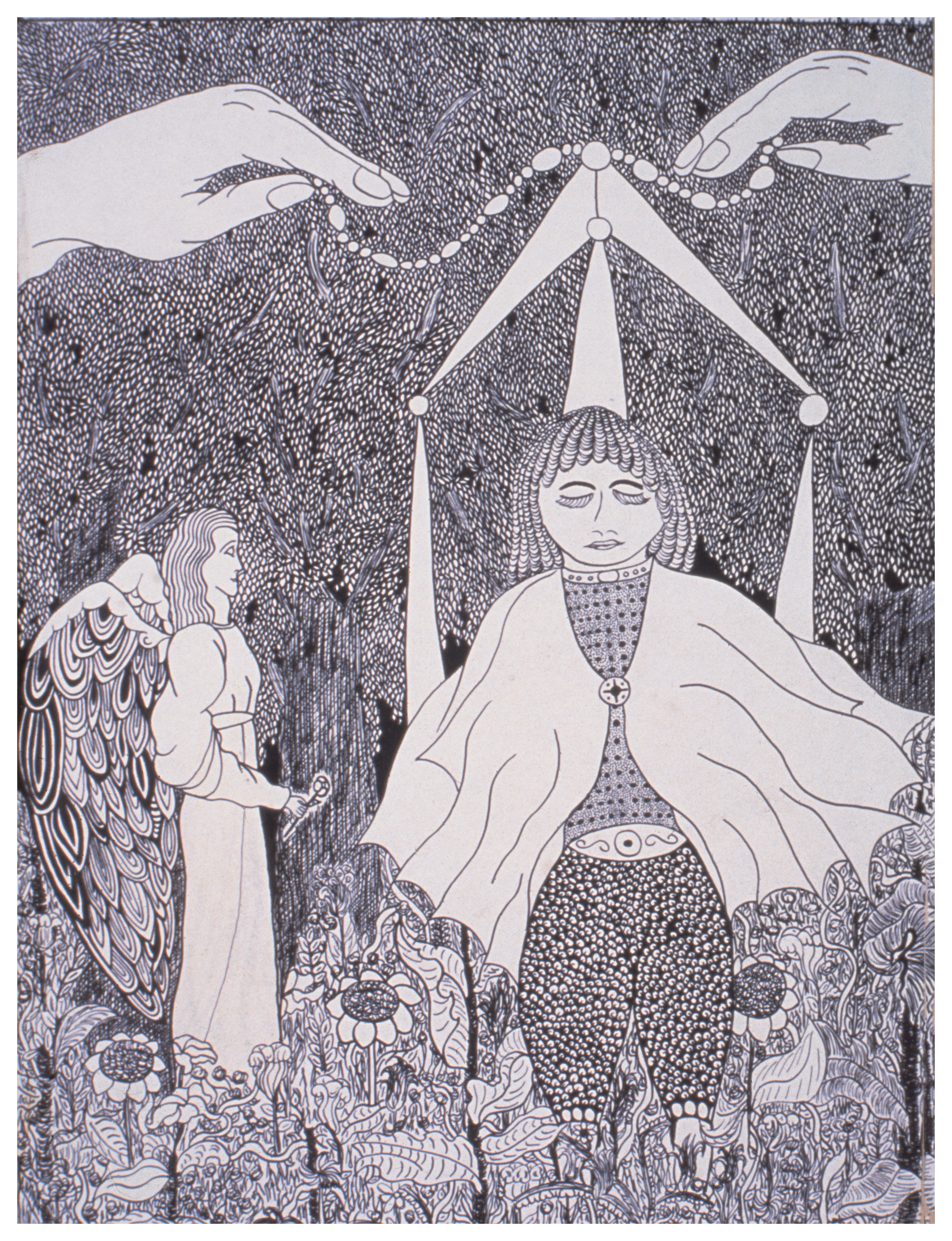
Overall, Puppeteer suggests a puppeteer, a person who manipulates an inanimate object called a puppet to create the illusion that the puppet is alive. It presents this puppeteer as a solitary, invisible figure orchestrating within a pictorial space that suggests some kind of stage.
The theme and style drew on my early 1970s engagement with Aubrey Beardsley’s graphic work, particularly the drawings he did for Salomé. Apparent similarities include the Puppeteer’s flatness; the use of line, pattern and ornament to delineate a narrative that evokes design more than it does realism; and the use of costume and texture to illicit different emotional registers. There are also echoes of Art Nouveau in this early work, a style Beardsley adapted into his high-contrast black-and-white style. Continue reading “Puppeteer (1973)”