Tracing the Contours of Art, Science, Technology and Cognitive Neuroscience
Category: Works on Paper
This section showcases works on paper. Since the purpose of this website is to archive Amy Ione’s work from the 1970s to the present, both successful and less successful work is displayed. For more information about any of the works, click on the caption below the painting or send an email.
The tree of the knowledge or of good and evil is one of two specific trees in the story of the Garden of Eden in Genesis 2–3, along with the tree of life.
This painting was created with an airbrush, intuitively cut templates and ink. Back of paper includes an abandoned airbrushed draft.
The early sketches for Libra on this page demonstrate how some of my early black-and-white pieces were developed and how I used Koh-i-noor technical pens in sketching them out. These Koh-i-Nor technical pens produce lines in a range of line widths, as shown in the chart that accompanies this entry. They helped guide the perceptual visualization process that aimed to portray a musical dynamic.
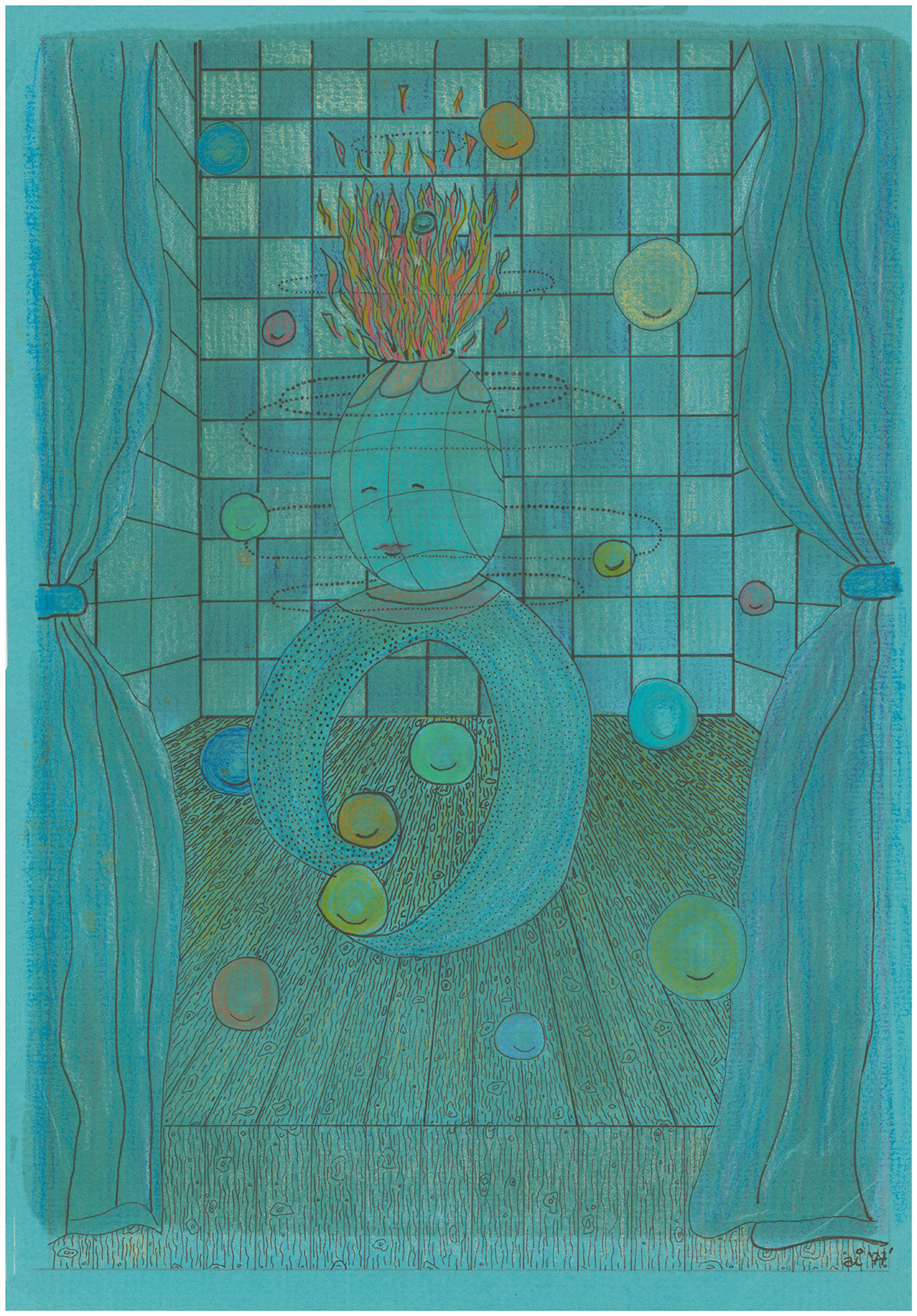
This carefully staged, dreamlike interior merges theatrical space, symbolic imagery, and an abstracted dancing figure. Executed in colored pencil and ink, the drawing balances delicacy of line with a restrained yet luminous palette dominated by cool shades of blues, punctuated by warmer accents. The blues are accentuated by my use a paper that is both turquoise colored and textured.
Lovebirds (1987) is a finely balanced ink drawing that captures the intimacy and symmetry of paired forms. Executed with crisp line work and subtle geometric interplay, the composition evokes both natural grace and abstract rhythm. The drawing was conceived collaboratively with Jerry Bass for Tjotjok, a collection of 86 Bass poems illustrated by my art. Continue reading “Lovebirds (1987)”
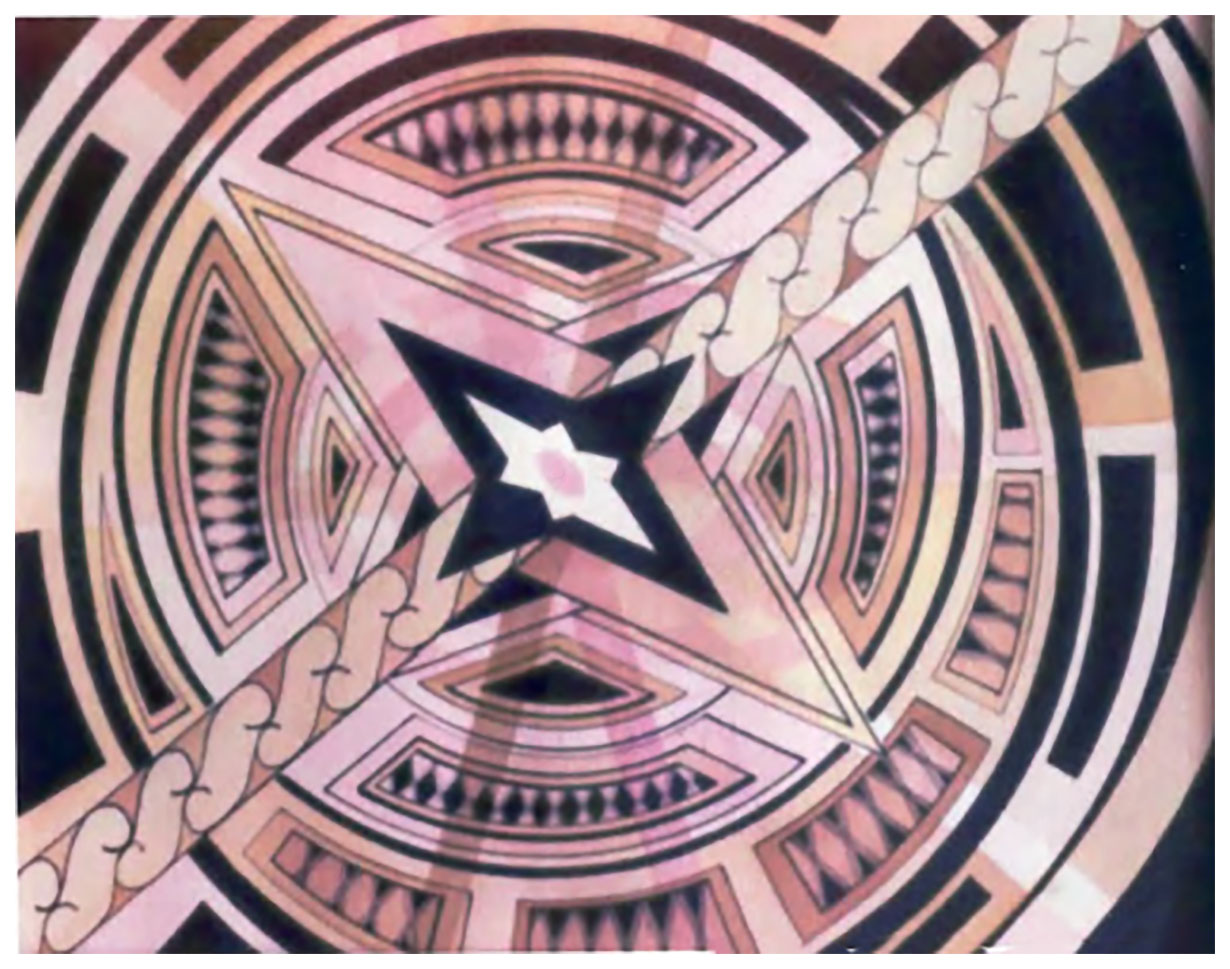
This painting was based on a series of photographs of the Mining Building rosette architectural ornamentation on the University of California, Berkeley campus.
This somewhat disturbing image suggests a face that is fractured and not fully revealed. Overall, the faint central portrait emerges in a way that seems both fragmented and prismatic, even as the head points to a human presence. What stands out is how the unfocused gaze does not achieve a balance between portraiture and abstraction because its expression is shockingly off.